

<img src="http://www.sas15k01.com/49531.png" style="display:none;">

Donald Grava

Donald Grava
Versailles Group’s Founder, Donald W. Grava, brings a uniquely well-suited background to his position as President. His experience combines investment banking expertise with practical knowledge of the inner-workings of corporations of all sizes. Prior to Versailles Group, Mr. Grava was the former First Vice President of ELM Securities Inc., a New York-based investment banking firm, where he originated and successfully closed many domestic and international transactions. Prior to ELM, Mr. Grava gained invaluable corporate finance experience while at Warburg Paribas Becker in New York City. Prior to working on Wall Street, Mr. Grava honed his practical knowledge of corporate operations through strategic and financial planning roles at two different Fortune 200 companies. Mr. Grava started his career at Coopers & Lybrand where he gained hands-on accounting experience. Mr. Grava holds the following Securities Licenses: 7, 24, 27, 66, and 79. These licenses are sanctioned by FINRA (Financial Industry Regulatory Authority, Inc.). Mr. Grava is on the Board of Directors of The Jebb Center for Autistic Adult Living, a 501(c)(3) organization devoted to providing safe and challenging living environments for adults with Autism. Mr. Grava earned a B.A. in economics from Yale University and an M.B.A. from New York University’s Leonard N. Stern School of Business. While at Yale, he was captain of the heavyweight crew.

Recent Posts

Feb 17

M&A Deals - M&A Factoid

Donald Grava February 17, 2015

M&A Factoid - LLC and C Corporation


M&A Deals - Versailles Group


Limited Liability Company (LLC)

A Limited Liability Company is a type of corporate structure designed to limit the founders’ losses to the amount of their investment. It is a hybrid structure that combines the characteristics of a corporation and sole proprietorship. An LLC does not pay taxes like a traditional corporation; instead, its owners pay taxes on their proportion of the LLC profits at their individual tax rates. Unlike a corporation, an LLC must be terminated upon the death or bankruptcy of a member. An LLC is not an appropriate corporate structure if the company hopes to go public in the future. It should also be noted that the limits on liability could be exceeded if there is fraud.

C Corporation

A C Corporation or C-Corp is a type of ownership structure that allows any number of individuals or companies to own shares. It is a stand-alone entity that limits its owner’s legal and financial liabilities that may arise due to the actions of the company. In this type of corporation, income is taxed at the corporate level and is taxed again in the form of income taxes when it is distributed to its shareholders. While double taxation is a drawback of this corporate structure, the limited liability it provides to owners as well as the ability to reinvest profits in the company at a lower corporate tax rate are advantages of C Corporations. Once again, it should be noted that the limitation on liability could be exceeded if there is fraud.


Feb 15

2014 M&A Deals

Donald Grava February 15, 2015

M&A Deals - 2014

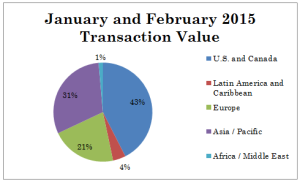
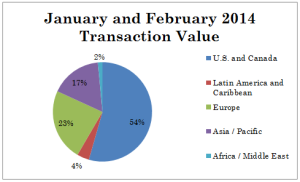
M&A deal volume in 2014 was quite robust – almost US$4 trillion of transactions were completed worldwide, which was an increase of over 50 percent from 2013.
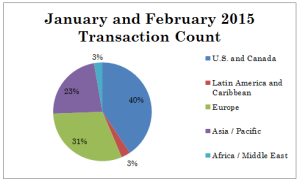
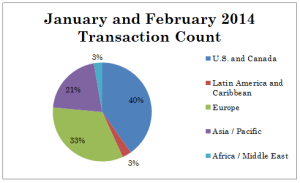
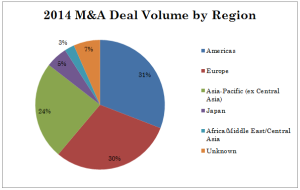
43,613 transactions were completed across the globe in 2014. The Americas and Europe experienced approximately the same M&A volume with Asia Pacific trailing by a few points.


2014 M&A Deals By Region

2014 M&A deals by region

 
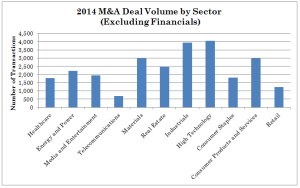
By sector, excluding financials, high tech was the most active followed by industrials, consumer products and services, and materials. Although telecom had the lowest number of transactions completed in 2014, deals in this sector were very large, resulting in over US$260 billion of deal value.


2014 M&A Deals by Sector

2014 M&A deals by sector


About Versailles Group, Ltd.

For over 28 years, Versailles Group's skill, flexibility, and experience have enabled it to successfully close M&A transactions for companies with revenues between US$2 million and US$250 million. Versailles Group has closed transactions in all economic environments, literally around the world.

Versailles Group provides clients with both buy-side and sell-side M&A services, and has been completing cross-border transactions since its founding in 1987.


Feb 12

Reverse Triangular Mergers

Donald Grava February 12, 2015

Advantages of a Reverse Triangular Merger

During an M&A transaction, a possible purchasing tactic that can be used by an acquiring company is a reverse triangular merger. A reverse triangular merger is when the buyer forms a wholly-owned subsidiary which in turn works as a purchasing vehicle to acquire the target firm. To execute the deal, the target firm and wholly-owned subsidiary will merge giving the acquiring firm control of the target company. This newly merged company will function as a wholly-owned subsidiary of the acquiring firm so it will own all of its assets (tangible and intangible), liabilities, contracts, etc.


Versailles Group Blog


The advantages and disadvantages are the same as a direct merger; however, this type of acquisition is easier to execute since the only shareholder of the acquisition subsidiary is the purchasing firm which provides certain advantages, e.g., shareholder approval easy to obtain.

A reverse triangular merger allows the acquiring firm to gain control of the target company’s non-transferable assets and contracts which is not always possible with other acquisition techniques. Typically, acquirers have difficulty transferring contacts, particularly contracts with the government or governmental agencies when it is an asset transaction. This technique, i.e., utilizing a reverse triangular merger, while not perfect, does help. The downside is that the acquiring company does acquire all of the liabilities of the company as it is essentially a stock transaction.


Feb 10

Asset Purchase Agreement and Stock Purchase Agreement

Donald Grava February 10, 2015

M&A Factoid


how do i sell my business

Asset Purchase Agreement

In an M&A transaction, the asset purchase agreement or “APA” is a definitive agreement between the buyer and seller that identifies, among other things, the assets (and usually selected liabilities) being acquired from the seller and the total consideration paid for these assets. The assets and selected liabilities being acquired are detailed in a schedule in the APA. Similarly, any assets excluded from the purchase are also itemized in a separate schedule. The APA will include many important provisions such as representations and warranties, restrictive covenants, financing, solicitation, etc. Unlike a Letter of Intent, the APA is binding on both parties and clearly defines the final deal terms of the transaction. It is important to note that in an APA no shares of the company are being acquired - only the assets (and selected liabilities) of the company for sale are purchased by the buyer. Therefore, the buyer does not acquire any of the seller’s other liabilities, including past obligations that might not even be known on the day of closing.

Stock Purchase Agreement

In an M&A transaction, the stock purchase agreement or “SPA” is a definitive agreement between the buyer and seller that finalizes all terms and conditions related to the acquisition of the seller’s shares. In a SPA, unlike an asset purchase agreement, title to both the seller’s assets and all liabilities are conveyed as a result of the acquisition of the seller’s shares. It is extremely important for the seller to review the representations and warranties section of the SPA to ensure there are no statements that are believed to be untrue. False representations and warranties could result in legal action even after the deal is closed.

Feb 05

What is M&A?

Donald Grava February 5, 2015


What is M&A?


What is M&A

Mergers and acquisitions or “M&A” involves the sale of a company, business division, or assets to another company in an attempt to enhance shareholder value. M&A is a critical part of many corporate strategies as it is used to increase growth or can be used to reduce risk and protect shareholder value. In order to complete successful M&A transactions, companies usually enlist the help of investment banks on both the sell-side and buy-side of the deal.


Sell-Side M&A Advisory

A sell-side M&A advisor will work closely with the selling company in order to effectively market its sale. One of the main responsibilities of the sell-side M&A advisor is to produce a Confidential Information Memorandum (“CIM”) or Offering Memorandum, which describes the company in detail, highlighting the firm’s strengths, growth opportunities, and why it would make a good acquisition. The sell-side advisor will also play a critical role in identifying qualified buyers and contacting these buyers in order to complete a sale. The sell-side M&A advisor’s objective is to maximize the consideration paid for the company and to meet the seller’s additional goals. These additional goals may include retaining an equity stake in the acquired company, having a continued role in the company such as a consulting arrangement, retaining a board seat in the company, etc. Sell-side advisors also help facilitate the transaction in many ways, including helping the seller and buyer navigate due diligence, structuring and negotiating the transaction, etc.


Buy-Side M&A Advisory

A buy-side M&A advisor will assist a company in identifying appropriate targets to acquire and complete the purchase in an efficient and orderly manner. The main objective of the buy-side M&A advisor is not only to make sure its client does not overpay for a target, but to ensure the target fits within the acquirers overall corporate strategy and growth objectives. The M&A advisor seeks to complete a transaction that will build shareholder value for its client long after the transaction is closed. The buy-side advisor will also help the buyer navigate due diligence, structure and negotiate the transaction, among other tasks towards the completion of a successful transaction.

Feb 04

M&A Factoid - Private Placements and Venture Capital

Donald Grava February 4, 2015


Private Placement and venture capital


Private Placement

Private placements are securities offered by issuers to a select group of potential buyers rather than the open market. Since these securities are not available to the public, they are usually out of the scope of SEC registration and are considered exempt transactions. Although these securities are private, they are still subject to federal securities anti-fraud regulation. In order to qualify for private placement exemption, purchasers of the securities must be sophisticated investors, have access to information normally provided in a prospectus, must be able to bear the investment’s economic risk, and agree not to resell or distribute the securities to the public. Since the placements are private rather than public, the average investor is usually only made aware of the placement after it has occurred.

Venture Capital

Venture capital is a segment of the private equity industry that focuses on investing in new companies with potentially high growth rates. Venture capital firms are an important source of funding for startups that do not have access to capital markets. Venture capital investors provide money to start-up firms and small businesses with perceived long-term growth potential. In return, these investors typically receive equity in the startup and a seat on the company’s board of directors. Venture capital investments are extremely risky but also have the potential for above average returns. Most venture capital comes from a group of wealthy investors, investment banks, and other financial institutions that put together their investments or form partnerships.

Jan 29

Developing Acquisition Criteria

Donald Grava January 29, 2015


Acquisition criteria


Developing Acquisition Criteria

Once a company has determined that acquisitions are going to be the most cost effective way to increase shareholder value, the next step is to develop criteria for potential acquisition targets. This will serve as a guide, but it’s important to remember that one needs to be flexible.

No target will fulfill every requirement. As we say, a buyer needs to be optimistic and opportunistic if a successful transaction is going to be completed. It might be a good idea to rank the criteria so that one has an idea of what the most important objectives are to the buyer. This will help the buyer navigate through the potential targets faster and more efficiently.

The type of questions one should ask in order to develop criteria should fall under the following categories: general, operating, and financial.

General
In terms of general criteria, there are many important questions to consider. Is retaining management important? How important is the geographic location of the target? How much ownership is the buyer willing to accept if less than 100 percent? Are the corporate cultures compatible?

Operating
When thinking about operating criteria, what products and industries are you interested in? Is market share important? What kind of distribution channels does the other company have? How advanced is the acquisition candidate’s technology?

Financial
With regard to financial criteria, one needs to be clear on the objectives. What kind of revenues and growth rates are you looking for? What is an acceptable debt-equity ratio? What kind of multiple are you looking to pay and is that a multiple of EBITDA, revenues, etc.? How are you looking to finance the acquisition? Would you be willing to pay an earn-out? Does the acquisition need to be accretive right away?

This is a very short summary of the items that should be considered when considering an acquisition. Obviously, some criteria will have greater importance than others depending on the buyer’s strategic goals. Your M&A advisor can help you develop the acquisition criteria, identify and contact the targets, and conduct sophisticated financial modeling and analysis of the potential target. The success of the acquisition starts with the search criteria and will be enhanced by additional analysis.

Jan 28

M&A Factoid - Initial Public Offering and Secondary Offering

Donald Grava January 28, 2015


I want to sell my company.

Initial Public Offering

An initial public offering or “IPO” is the first offering of stock by a company to the public. By completing an IPO, the once previously private company will become publically traded, subjecting it to additional regulatory pressures and costs but also allowing it greater access to the capital markets. A successful IPO will raise a large amount of money for the issuing company, which can be used for growth initiatives. By completing an IPO, the company will oftentimes receive better rates on its debt issuances due to increased transparency of the firm, making further funding less costly.

Secondary Offering

A secondary offering occurs when a publicly traded company issues additional shares to the public. This can be done in order to raise additional funds for growth or to accomplish a refinancing. Secondary offerings may cause share prices to decrease as more shares of the company’s stock are now available on the market. Another form of secondary offering occurs when founders of a business would like to decrease their ownership positions in the company. This type of secondary offering is usually done over time as to not exert too much downward pressure on the company’s share price as a result of the increased selling volume. This type of secondary offering does not dilute current owners’ holdings in the company unlike secondary offerings in which additional shares are issued.

Jan 27

2014 M&A Activity

Donald Grava January 27, 2015

M&A volume in 2014 was dramatically higher than 2013. In 2014, almost US$4 trillion of transactions were completed versus US$2.6 trillion in 2013. By volume, 43,613 transactions were completed in 2014 versus 40,783 transactions in 2013.

Graphically, here’s a look at the increase by quarter.


January email blast II chart I


By sector, Financial Services, Healthcare, and Energy/Power were the most active.


Second January Blast Chart II v2


Jan 22

Advantages and Disadvantages of Broad and Targeted Auctions in M&A

Donald Grava January 22, 2015


I want to sell my company


M&A Auctions

An M&A auction is the process of presenting a company that is for sale to potential buyers. There are two different types of auctions, broad auctions and targeted auctions. There are several advantages and disadvantages to each approach.

Just as the name implies, a broad auction is designed to reach out to as many potential buyers as possible. Your M&A advisors, if he or she is well-experienced, should contact hundreds or even thousands of prospective buyers worldwide. This list should include both strategic and financial sponsors. The goal of this strategy is to maximize the competitive dynamics of the sales process to increase the odds of finding the best possible offer. It helps to ensure that all possible bidders have been reached and it limits potential buyers negotiating leverage. One of the concerns with this approach is maintaining the confidentiality of the transaction. Of course, an experienced M&A advisor will know how to conduct this type of auction without breaches of confidentiality and if done properly, this approach will insure the sale of the company for the best value and terms.

A targeted auction is when your M&A advisor focuses on a few clearly defined buyers that are identified as having a strong strategic fit. These buyers should also be vetted to make sure that they have the financial resources to acquire the company. With a targeted auction is it much easier to maintain confidentiality and minimize any possible business disruption from the process. However, there is a much higher chance that the best possible value and terms will not be achieved due to the limited auction. The only way to insure the best possible transaction is to make sure that all possible buyers, via a broad auction, are included in the process.

Your M&A advisor should be able to explain the pros and cons of each method and help the seller to make an informed decision.