


Geography is rarely the hardest part of an international deal. The greater challenge is reconciling different regulatory regimes, valuation assumptions and negotiating norms before they undermine the transaction’s strategic logic. For middle-market owners, cross border M&A advisory means addressing these structural asymmetries, not simply finding a buyer or target abroad. CFIUS review, GDPR considerations and differing expectations at the negotiating table can affect timing, deal terms and the prospects for integration.
Business owners already know that a sound strategic fit doesn’t guarantee a successful transaction. Across borders, that fit must also withstand distinct legal and commercial frameworks, different approaches to assessing value, and cultural friction that can surface during negotiation or after closing. This article examines the international deal lifecycle, from evaluating strategic rationale and market-specific value drivers to managing diligence, regulatory risk and integration planning. It offers a practical framework for identifying where assumptions may diverge, testing those differences early and making informed decisions as the transaction advances.
Key Takeaways
- Test whether an international acquisition advances a durable strategic objective, such as market diversification or access to technology, rather than relying on geographic expansion alone.
- Use cross border M&A advisory to identify regulatory and data considerations early, then assess how they could affect deal structure, timing and execution.
- Examine how negotiation norms and operating expectations may influence diligence, decision-making and post-merger integration; surface differences before they become execution risks.
- Evaluate currency exposure and country-specific risk alongside operating forecasts, and consider how each affects valuation assumptions and transaction timing.
- Assess whether the advisory model provides the senior attention and transaction-specific judgment a complex middle-market deal requires.
The Strategic Imperative of Cross-Border M&A in 2026
An international acquisition is most persuasive when it addresses a strategic need that would be difficult to meet through organic growth alone. A buyer may seek intellectual property, specialized technical capabilities, customer access or a presence in a market where it has limited reach. The deal’s rationale should extend beyond geographic expansion: management must be able to explain how the acquired business fits the operating model and how the anticipated benefits could be realized.
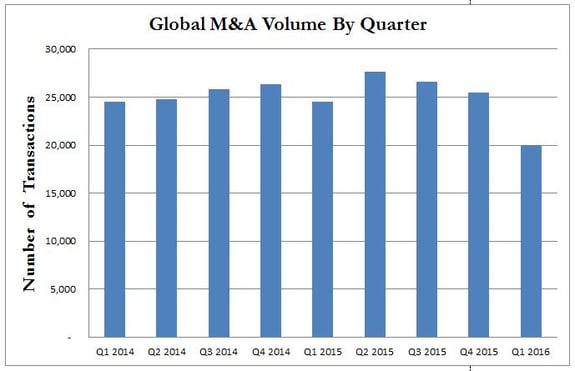
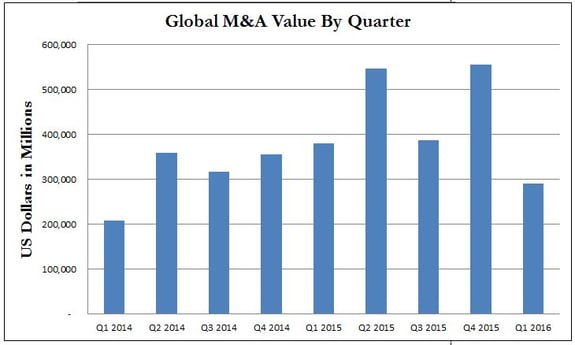
The 2026 market is uneven. Global M&A deal value is projected to reach approximately $4 trillion, up 13% from 2025, while deal volume is expected to decline by about 13%, to a projected 42,000 transactions. Megadeals account for a rising share of total value, leaving smaller transactions in a more selective environment. For middle-market companies, this divergence makes strategic fit particularly important. International acquirers may pursue a target for a specific technology, customer base or operating capability, even when the company is modest in scale.
Drivers of International Consolidation
Intellectual property and localized supply-chain resilience can support consolidation when a target provides capabilities or production access that would take substantial time to develop internally. Trade relationships and shifting supply-chain priorities may also influence where companies source, manufacture and serve customers. These advantages need to be assessed against integration requirements and the costs of maintaining operations across markets.
Valuation differences between markets can attract buyers, but a lower multiple alone doesn’t establish that a business is undervalued. Differences in growth expectations, access to capital, accounting presentation and perceived risk may help explain the gap. Private equity firms may also pursue cross-border platform strategies, using an initial acquisition as a base for expansion. The investment case depends on whether follow-on acquisitions can be integrated and financed on terms consistent with the strategy.
Boutique Advisory vs. Bulge Bracket Reach
Large banks can offer broad networks and substantial resources, which may be useful in transactions involving many counterparties or complex financing needs. Yet scale is not the only measure of reach. In a middle-market deal, buyer selection depends on identifying which companies have a credible strategic reason to engage, then presenting the target in terms that make that rationale clear. A focused cross border M&A advisory process should connect market analysis, valuation and buyer outreach to the seller’s objectives, rather than treating a wide contact list as a substitute for fit.
For owners, the central question is whether an international transaction can deliver value that is difficult to achieve through other paths. That answer rests on the target’s distinct capabilities, the buyer’s ability to use them and the discipline with which the parties test their assumptions before committing to a deal.
Navigating Regulatory and Structural Asymmetries
Regulatory review can shape a transaction’s certainty as much as its timetable. In the United States, CFIUS scrutiny may be relevant to certain foreign investments, while competition authorities assess transactions under their own processes. In 2026, national security considerations remain prominent: the COINS Act, signed in December 2025, expands the scope of the U.S. outbound investment security program, with existing rules remaining in effect until Treasury issues new regulations. CFIUS penalties for material misstatements or omissions also rose in late 2024, to a maximum of $5 million per occurrence. These developments make accurate disclosures and early assessment of review risk central to deal planning.
Regulatory frameworks are also changing elsewhere. The European Commission published draft revised Merger Guidelines on April 30, 2026, for consultation, which concluded June 26. The draft broadens the assessment framework to consider factors including innovation, sustainability and resilience. For deal teams, the practical question is not simply whether a filing may be required, but how potential review, remedies or timing could affect financing, contractual conditions and the parties’ willingness to remain committed. A prolonged process can strain management attention and create deal fatigue, particularly if milestones and communications are not clearly planned.
Compliance and Deal Structure
Competition, investment-screening and data rules should be assessed jurisdiction by jurisdiction. A target that handles personal information may raise questions under regimes such as GDPR or CCPA, while cross-border data access and transfer assumptions deserve scrutiny during diligence. ESG-related matters also warrant a grounded review: identify applicable reporting expectations, relevant policies and potential liabilities rather than assuming a single standard applies everywhere. Capturing the Value of Cross-Border Deals offers a broader perspective on the diligence and strategic alignment required to realize value from international transactions.
Deal architecture carries its own trade-offs. An asset purchase may allow a buyer to select specific assets and liabilities, while a stock purchase generally transfers ownership of the entity and its existing obligations. The legal, tax and operational consequences vary by jurisdiction and transaction facts, so the structure should be evaluated with qualified local advisers. It can affect approvals, employee arrangements, contracts and the allocation of liabilities, not merely the headline price.
Financial Reporting and Execution
Differences in reporting frameworks can complicate comparisons, especially when revenue recognition, working capital or nonrecurring items influence reported EBITDA. Rather than assume that U.S. GAAP and IFRS figures are directly comparable, buyers and sellers should reconcile accounting policies and develop a consistent bridge from reported results to transaction earnings. The same discipline supports valuation, purchase-price mechanics and negotiations over adjustments.
For owners preparing for a sale involving international buyers, sell-side M&A advisory can help organize the process and keep transaction assumptions clear as diligence advances. Effective cross border M&A advisory connects regulatory exposure, accounting comparability and deal structure to one central test: whether the parties can reach terms that remain workable through review and closing.
Cultural Intelligence as a Quantitative Value Driver
Cultural misalignment is often discussed as a post-merger integration problem, but its effects can begin during negotiations. Different expectations about disclosure, authority and the pace of decision-making may complicate diligence or leave key assumptions unresolved. No single cultural pattern predicts how a company will behave. The practical task is to understand how this particular leadership team makes decisions, communicates risk and builds trust, then account for those findings in the transaction plan.
Negotiation styles can differ. Some business settings favor direct discussion and explicit disagreement; others place greater weight on context, relationship-building and consensus before a formal position is stated. These are tendencies, not rules. A buyer who interprets reserve as resistance, or a seller who reads direct questions as distrust, may misjudge the other party’s intentions. Senior participants can help clarify meaning, confirm decision authority and distinguish a genuine concern from a difference in protocol.
The Human Capital Challenge
Integration plans should identify which leaders and employees hold customer relationships, technical knowledge or operational responsibility that the deal depends on. Retention assumptions need to reflect local employment frameworks and the practical incentives available, with jurisdiction-specific advice where required. Governance also matters: if the buyer and target differ on who approves budgets, hires executives or resolves disputes, decision rights should be made explicit before closing.
Communication is part of execution. Employees need a clear account of what is changing, what is not, and how decisions will be made. In a multilingual workforce, translated materials alone may not answer concerns about reporting lines, job continuity or the target’s identity within the combined business. Consistent messages and credible local leadership can reduce uncertainty without promising outcomes the buyer cannot guarantee.
Negotiation Strategy and Value
For family-owned businesses, trust and transparency can be especially consequential. Owners may weigh the treatment of employees, customers and the company’s legacy alongside price and deal certainty. A buyer that addresses these priorities with specificity may build confidence; a seller that understands the buyer’s approval process can better assess whether stated interest is actionable. In cross border M&A advisory, senior-level presence can help keep these discussions candid and the timetable realistic, particularly where decisions involve several stakeholders.
A “culture premium” should not be treated as a fixed amount added to valuation. Instead, test how cultural fit affects the assumptions behind value: the likelihood of retaining key managers, achieving planned synergies, preserving customer relationships and completing integration on schedule. Model downside cases as well as the expected outcome. If the investment case depends on rapid integration but the parties have not agreed on decision rights or operating practices, the forecast may be too optimistic.
Versailles Group’s senior advisory team is involved in every deal. For owners and buyers alike, the objective is not to eliminate cultural differences, but to identify which ones could change execution and address them before they become costly surprises.
Valuation Nuances in International Transactions
A cross-border valuation is not a domestic model translated into another currency. It must account for how the target earns revenue, funds operations and bears risk in its own market, then distinguish those factors from risks the buyer can manage after closing. A local company may warrant a different multiple from a U.S. peer because of its growth profile, access to capital, customer concentration or exposure to political and supply-chain disruption. The difference should be explained by evidence, not treated automatically as a discount or an opportunity.
Currency assumptions require similar discipline. If revenue, expenses and debt are denominated in different currencies, the buyer should test how exchange-rate movements affect cash flow and the purchase price. The relevant exposure also changes over the transaction timeline: an agreed price may be stated in one currency while closing occurs later and operating earnings are generated in another. Hedging can reduce defined exposures, but its timing, scope and costs should be considered with treasury and financial advisers rather than assumed to eliminate currency risk.
Risk-Adjusted Valuations
Country and political risk can affect the cost of capital, forecast confidence and the range of plausible outcomes. Model these exposures explicitly, including potential supply interruptions or constraints on operating assumptions, and avoid charging twice for the same risk in both cash flows and the discount rate. A perceived “safe haven” premium for a U.S.-based middle-market asset should likewise be tested, not presumed: buyer demand, business quality, growth prospects and comparable transactions remain relevant. Representative transactions can provide context, though comparisons still require adjustments for market, timing and deal-specific terms.
Earnings normalization is another source of valuation divergence. Tax regimes, labor costs and one-time expenses can make reported results difficult to compare across jurisdictions. A useful analysis separates sustainable operating earnings from local tax effects and exceptional items, while documenting any adjustments to wages, benefits or owner compensation. Buyers should be cautious about treating local cost levels as immediately transferable savings; operating changes may require time, investment or local expertise.
Deal Structure and Currency Exposure
Terms can allocate uncertainty that a headline valuation cannot resolve. An earnout may link part of consideration to future performance, but only if the parties define measurement methods, accounting policies and control over the business clearly. A holdback or escrow can address specified post-closing claims, subject to negotiated release conditions and applicable legal advice. In a multi-currency transaction, documents should specify the currency used for funding, payment and any contingent consideration, as well as the method and date for conversion. Ambiguity can turn market movements into a separate dispute.
Sound cross border M&A advisory connects these choices to the investment thesis, so that valuation, risk allocation and currency mechanics reinforce rather than contradict one another. To discuss transaction considerations for a middle-market sale, contact Versailles Group.
The Boutique Advantage in Global Advisory
Cross-border transactions demand institutional discipline, but that doesn’t mean every middle-market company needs the same advisory model as a large public-company deal. A global bank may offer broad geographic coverage and substantial execution resources. For a smaller transaction, the central question is whether the team can apply those resources to the company’s specific objectives, keep decisions moving and respond to issues that emerge in negotiation or diligence.
Senior involvement matters because complex negotiations rarely follow a straight line. A buyer may revise its view of a target after examining customer concentration, local accounting practices or the role of a founder in daily operations. Experienced advisers can help owners assess the implications, compare alternatives and maintain a coherent negotiating position, rather than allowing a series of discrete diligence requests to drive the process. Cross border M&A advisory is most useful when strategy, valuation and execution remain connected throughout the transaction.
Senior Attention and Transaction Preparation
Versailles Group was founded in 1987 and specializes in middle-market cross-border transactions, with senior-level involvement in every deal. That structure is relevant where owners need a considered assessment of prospective buyers, not simply a broad list of names. Strategic buyers may value access to a market, technology or operating capability; financial buyers may focus on cash flow, growth potential and the path to future ownership. Understanding those different investment cases helps shape how the company is presented and which counterparties merit engagement.
Preparation also means anticipating the questions an international buyer may raise about earnings quality, management continuity, customer relationships and the transferability of operations. A well-supported narrative, consistent diligence materials and a clear view of transaction priorities help connect a domestic business with global capital. More on the firm’s approach is available in its overview of why choose Versailles Group.
Discretion and the Global Exit
Buyer selection involves more than comparing headline indications. Owners should weigh strategic fit, ability to complete, decision-making authority and the conditions attached to an offer. Confidentiality is equally important: premature disclosure can unsettle employees, customers or suppliers. A controlled process can limit unnecessary circulation of sensitive information while allowing qualified parties to assess the opportunity. The appropriate safeguards depend on the transaction and should be established before information is shared.
No advisory model removes regulatory, valuation or cultural uncertainty. It can, however, bring those considerations into the process early, clarify trade-offs and help owners make decisions with a fuller view of the consequences. For business owners considering an international sale, contact Versailles Group to discuss sell-side M&A advisory and the objectives of a potential transaction.
Prepare for the Decisions That Shape the Deal
International transactions reward preparation more than geographic ambition alone. A clear strategic rationale helps owners judge whether a buyer’s interest fits the company’s long-term prospects. Early attention to regulatory exposure, valuation assumptions and cultural differences can also reveal where deal terms or integration plans need closer examination.
For middle-market and lower-middle-market businesses, these questions are closely linked. A valuation depends on assumptions about future performance; those assumptions depend in part on whether the buyer can retain key people, manage currency exposure and operate effectively across markets. A considered process tests those dependencies before they become points of friction in negotiations or after closing.
Versailles Group, founded in 1987, specializes in middle-market transactions and provides senior-level involvement in every deal. Its experience is relevant to owners weighing an international sale and the choices that accompany it. If a potential transaction is on your horizon, consult with a senior M&A advisor at Versailles Group to discuss your objectives and the considerations that may shape the process. With a clear rationale and disciplined preparation, global complexity can be approached one decision at a time.
Frequently Asked Questions
What is cross-border M&A and why is it important for the middle market?
Cross-border M&A is a merger, acquisition or sale involving businesses based in different countries. For middle-market companies, it can provide access to customers, technology, intellectual property or operating capabilities that may be difficult to build independently. International interest can also broaden the potential buyer pool. The strategic rationale still needs close testing: market access or scale creates value only if the buyer can integrate the business and realize the expected benefits.
How does CFIUS impact international acquisitions of US companies?
CFIUS can review certain foreign investments in U.S. businesses for national security considerations, which may affect transaction timing, conditions or certainty. Whether a particular deal requires a filing or faces review depends on its facts and applicable rules, so parties should consult qualified legal counsel early. Deal teams should also consider how review affects closing conditions, information sharing and the parties’ willingness to proceed if approval or mitigation measures become an issue.
What are the biggest risks in a cross-border M&A transaction?
The principal risks vary by deal, but often include regulatory review, differences in accounting and valuation assumptions, currency movements, data obligations and integration challenges. A buyer may also underestimate the time and effort required to retain key employees or align decision-making practices. The practical response is to connect diligence findings to transaction terms and post-closing plans. Cross border M&A advisory can help owners assess these factors as related sources of deal risk, not isolated workstreams.
How do I value my business for an international strategic buyer?
Start with the company’s normalized earnings, cash flows, growth prospects and risks, then examine how the buyer’s strategic rationale may affect its view of the business. A strategic acquirer may value capabilities, customer access or intellectual property that are not fully reflected in historical results, but anticipated synergies should be supported rather than assumed. Compare relevant transactions carefully, accounting for market conditions, currency, country risk and differences in business mix.
What is the role of an investment bank in a cross-border deal?
An investment bank can help a seller prepare for a transaction, assess valuation, identify and approach potential buyers, manage the sale process and evaluate offers. In an international deal, that work may include helping parties compare strategic fit, financing assumptions and transaction conditions across prospective counterparties. Legal, tax and regulatory questions require appropriate specialist advice. Versailles Group is a boutique investment bank specializing in M&A for middle-market and lower-middle-market clients.
How long does a typical international M&A transaction take to close?
There is no reliable single timetable for an international transaction. Duration depends on the company’s readiness, the number and pace of buyer discussions, diligence findings, financing, negotiation and any regulatory reviews that apply. Cross-border processes may also require coordination among advisers and decision-makers in different jurisdictions. Sellers can improve process discipline by preparing financial and operational information early, setting clear milestones and identifying potential approval or diligence issues before they affect the closing schedule.
How do cultural differences impact M&A negotiations?
Cultural differences can shape how parties communicate concerns, signal agreement, establish trust and make decisions. A direct question may be routine to one negotiating team and feel confrontational to another; silence may indicate reflection rather than rejection. These differences are not fixed rules, so deal teams should clarify decision authority, confirm points of agreement and allow time for internal consultation. Doing so can reduce misunderstandings and help distinguish substantive objections from differences in negotiating protocol.
What is the difference between IFRS and US GAAP in M&A?
IFRS and U.S. GAAP are distinct accounting frameworks, and differences in accounting policies or presentation can affect how financial results are interpreted. In a transaction, the focus is on the target’s specific practices, including revenue recognition, working capital and items used to calculate EBITDA. Buyers and sellers should reconcile material differences and document adjustments so that earnings comparisons, valuation assumptions and purchase-price calculations use a consistent basis. Accounting specialists can assess the relevant reporting details.