


<img src="http://www.sas15k01.com/49531.png" style="display:none;">

Donald Grava

Donald Grava
Versailles Group’s Founder, Donald W. Grava, brings a uniquely well-suited background to his position as President. His experience combines investment banking expertise with practical knowledge of the inner-workings of corporations of all sizes. Prior to Versailles Group, Mr. Grava was the former First Vice President of ELM Securities Inc., a New York-based investment banking firm, where he originated and successfully closed many domestic and international transactions. Prior to ELM, Mr. Grava gained invaluable corporate finance experience while at Warburg Paribas Becker in New York City. Prior to working on Wall Street, Mr. Grava honed his practical knowledge of corporate operations through strategic and financial planning roles at two different Fortune 200 companies. Mr. Grava started his career at Coopers & Lybrand where he gained hands-on accounting experience. Mr. Grava holds the following Securities Licenses: 7, 24, 27, 66, and 79. These licenses are sanctioned by FINRA (Financial Industry Regulatory Authority, Inc.). Mr. Grava is on the Board of Directors of The Jebb Center for Autistic Adult Living, a 501(c)(3) organization devoted to providing safe and challenging living environments for adults with Autism. Mr. Grava earned a B.A. in economics from Yale University and an M.B.A. from New York University’s Leonard N. Stern School of Business. While at Yale, he was captain of the heavyweight crew.

Recent Posts

Mar 10

How to Choose the Right Buyer: Strategic, Private Equity, or Family Office?

Donald Grava March 10, 2026

Choosing the right buyer is one of the most consequential decisions a business owner will make when preparing for a sale. While the headline price in a letter of intent may capture the most attention, it is only one part of the equation. The type of buyer, whether a strategic, a private equity sponsor, or a family office, affects deal structure, governance, post-sale dynamics, and the owner’s role going forward.

For middle-market sellers, understanding these differences is essential. Each buyer category brings distinct objectives, time horizons, and expectations to a transaction. Aligning with the right buyer type increases the likelihood of a successful outcome not just financially, but also in terms of culture, continuity, and personal satisfaction.

Versailles Group, a Boston-based investment bank with decades of experience advising on domestic and cross-border M&A, works closely with business owners to evaluate buyer options and structure deals that reflect their goals and preserve what matters most.

DSC04769

Start with the Owner’s Objectives

A thoughtful buyer selection process begins well before negotiations start. Owners who take the time to define their priorities are better prepared to assess competing offers and determine which buyer type will serve them best.

For some sellers, the primary objective may be maximizing cash at closing. Others may be looking for partial liquidity while retaining a meaningful equity stake in the company. Some are focused on speed, deal certainty, or maintaining the business’s culture and leadership team. Many owners also have specific ideas about their post-transaction role. While some seek a full departure, others prefer to stay on in a leadership position or serve in a board or advisory capacity.

Without a clear understanding of these goals, it is difficult to evaluate offers or determine whether the future a potential buyer envisions aligns with the owner’s expectations.

Strategic Buyers: Operational Fit and Integration Potential

Strategic buyers are operating companies in the same or adjacent industries. These may include direct competitors, suppliers, customers, or larger corporations seeking to expand their reach, capabilities, or product offerings. They typically evaluate acquisitions based on how the target fits within their existing operations, the efficiencies it can deliver, and whether the deal aligns with their long-term strategy.

When strategic fit is strong, these buyers may be willing to pay a premium. The potential to reduce costs, expand distribution, enter new markets, or integrate new technologies often justifies higher valuations. For sellers, this can mean a clean exit at a compelling price and the opportunity to see their business become part of a larger, well-resourced organization.

Strategic buyers may also offer benefits for employees and customers, especially if the acquisition enhances service offerings, improves infrastructure, or creates advancement opportunities for staff.

However, integration can bring challenges. Folding a business into a larger organization may lead to changes in company culture, brand identity, and reporting structures. Consolidation of roles, systems, and decision-making processes can be disruptive. Sellers who value continuity or wish to maintain ongoing involvement may find that influence and autonomy are limited following a strategic acquisition, especially in full-cash buyouts.

When the strategic buyer is a competitor, confidentiality becomes a critical concern. Information shared during diligence must be carefully managed, as it could pose a risk if the deal does not close. Owners exploring strategic interest should consider the potential impact on employees, customers, and market reputation, and ensure that the process is handled with discretion.

Private Equity Buyers: Capital, Growth, and Second-Exit Potential

Private equity firms are financial investors that manage institutional or fund capital with the intent of acquiring, growing, and ultimately exiting their investments within a defined period. These buyers evaluate companies based on return potential, scalability, and their ability to support growth through capital, governance, and operational expertise.

Private equity transactions often involve a combination of upfront liquidity for the seller and retained equity for future upside. For owners seeking to remain involved, this offers the opportunity to participate in a second sale at a potentially higher valuation. This "second bite at the apple" can be an important wealth creation event, particularly when paired with growth initiatives, acquisitions, or operational improvements that expand the business’s value.

In many cases, private equity buyers will seek to keep existing management teams in place and may invest in professionalizing operations, refining strategy, or pursuing add-on acquisitions. The brand and culture of the business often remain intact, particularly when the acquisition is intended as a platform for future growth.

At the same time, private equity deals tend to involve more complex structures. Leverage, performance targets, and detailed governance requirements are common. Strategic decisions are often subject to board approval, and control is typically shared between management and investor representatives. This dynamic can be productive, but it also reduces the owner's ability to act unilaterally.

The private equity model is driven by time-bound investment cycles. Firms generally target a three to seven-year holding period, after which they seek to sell or recapitalize the business. Owners who prefer to avoid the pressure of growth targets or a second exit may find that this model is not the right fit.

Family Offices: Stewardship, Flexibility, and Long-Term Perspective

Family offices manage the private capital of high-net-worth families and have become increasingly active in direct private company investments. While some operate much like private equity funds, others emphasize capital preservation, steady returns, and values-based investing.

Many family offices offer a longer investment horizon and a more patient approach to ownership. Unlike private equity, they are not required to exit within a defined timeframe. This can appeal to owners who prioritize continuity, cultural preservation, and stability for their employees and customers.

Family offices may be open to customized deal structures, including minority investments, staged exits, or leadership transitions that occur gradually. These flexible arrangements can be particularly attractive to founders who want to reduce financial risk while ensuring a thoughtful transition.

However, family offices vary widely in style, expertise, and resources. Some have highly experienced investment teams and deep sector knowledge, while others operate more conservatively and at a slower pace. Their appetite for leverage and valuation levels may be more moderate, and their decision-making process can lack the formalized structure of private equity funds.

Evaluating a family office requires more than reviewing a term sheet. Sellers should carefully assess each group’s track record, governance approach, and alignment with the company’s goals. When the fit is right, a family office can be an excellent long-term steward. But given the diversity within this category, due diligence is especially important.

Key Considerations in Comparing Buyer Types

Choosing between strategic, private equity, and family office buyers involves more than just comparing price. Owners should evaluate the total economics of each offer, including how and when value is delivered. Upfront cash, earn-outs, retained equity, seller financing, and working capital adjustments all affect the net outcome.

Governance and control are also essential factors. Sellers who want to remain involved must understand what authority they will retain and what decisions will require approval. The board structure, reporting requirements, and alignment of interests all influence post-transaction dynamics.

Time horizon matters as well. A strategic buyer may integrate the business quickly, while a private equity partner may expect rapid scaling and a second exit. A family office may prioritize stability and support gradual transitions.

Employee treatment, culture, and brand should not be overlooked. Some owners care deeply about how their team is treated and whether the company’s values are preserved. Understanding each buyer’s integration philosophy and track record helps reduce uncertainty and ensures that commitments made during negotiation are realistic.

Scenarios That Illustrate the Differences

Consider an owner who wants to retire completely and secure maximum value in a single transaction. A strategic buyer that sees clear integration benefits and can fund a full-cash acquisition may be the best fit.

Now take an owner who wants to de-risk, stay involved, and participate in future upside. A private equity buyer may offer the ideal combination of capital, support, and structure.

Lastly, an owner focused on legacy and continuity who prefers gradual change and less pressure on performance milestones may be drawn to a family office that shares those values.

How Versailles Group Helps Owners Evaluate and Select Buyers

Versailles Group works with owners to clarify their objectives early in the process. This includes understanding financial needs, personal goals, cultural considerations, and long-term vision. With that foundation, the firm develops a strategy to target the most appropriate buyer universe, whether that includes strategic acquirers, private equity firms, family offices, or a carefully selected mix of these.

Through a confidential, competitive sale process, Versailles Group brings multiple qualified buyers to the table. This creates an opportunity to compare offers not only on price but also on structure, governance, and alignment with the owner’s vision. The firm provides in-depth bid analysis, negotiates terms, and helps owners weigh trade-offs between financial outcomes and softer factors such as legacy and culture.

Versailles Group also works closely with legal, tax, and wealth advisors to ensure that chosen offers support the owner’s long-term financial and estate plans. With deep relationships across the M&A ecosystem and decades of experience guiding transactions from initial preparation through closing, the firm provides business owners with the insight and confidence to choose the right buyer for their business and their future.

For owners considering a sale or responding to inbound interest, an early conversation with Versailles Group can be the first step toward understanding which buyer type aligns best and how to position the company for maximum success.


Written by Don Grava

10 March 2026


Versailles Group, Ltd.

Founded in 1987, Versailles Group is a boutique investment bank that specializes in international mergers, acquisitions, and divestitures. Versailles Group’s skill, flexibility, and experience have enabled it to successfully close M&A transactions for companies in the middle and lower-middle market. Versailles Group has closed transactions in all economic environments, literally around the world.

Versailles Group provides clients with both buy-side and sell-side M&A services and has been completing cross-border transactions since its founding in 1987.

More information on Versailles Group, Ltd. can be found at

www.versaillesgroup.com

For additional information, please contact

Donald Grava

Founder and President

+617-449-3325


Feb 19

Hockey Stick Projections in M&A

Donald Grava February 19, 2026

In middle-market M&A transactions, few elements attract more attention or skepticism than the financial forecast. Among them, the so-called hockey stick projection has become a familiar feature of deal materials. Historical performance appears steady or modest, followed by a sharp acceleration in projected growth shortly after acquisition.

For founders preparing to sell their businesses, these projections often reflect genuine optimism about untapped opportunities. For buyers, however, they frequently represent one of the primary sources of post-acquisition disappointment.

Understanding why hockey stick projections emerge, and how sophisticated acquirers evaluate them, is critical for owners seeking a successful transaction and a durable valuation.

Ice Hockey Game at the Benchmark International Arena

The Appeal and the Problem

A hockey stick projection is visually compelling. Years of stable growth are followed by a pronounced upward trajectory driven by expected investments, expanded sales capacity, pricing improvements, or entry into new markets. The underlying message is straightforward: the business has performed well historically but is positioned for materially faster growth under new ownership.

In founder-led companies, this narrative often contains elements of truth. Many businesses operate with constrained capital, limited management depth, or underdeveloped sales infrastructure. Owners reasonably believe that additional resources could unlock growth.

The difficulty arises when projected acceleration exceeds what operating realities can support.

Most middle-market businesses grow incrementally rather than discontinuously. Sustained step changes in performance typically require structural shifts such as new distribution channels, differentiated products, regulatory change, or meaningful competitive dislocation. Absent these catalysts, sharp inflections rarely occur on the timeline suggested in transaction models.

When projections prove unattainable, consequences extend beyond valuation adjustments. Buyers may face impaired returns, strained management relationships, and integration challenges driven by missed expectations rather than operational weakness.

Why Sellers Gravitate Toward Aggressive Forecasts

The incentives surrounding a sale naturally encourage optimistic projections.

Valuations are influenced by expected future earnings. Higher growth assumptions often support higher multiples, particularly when buyers underwrite forward performance rather than trailing results. Even modest increases in projected growth can materially change perceived enterprise value.

Founders also carry deep conviction about their businesses. Years of operating experience create a clear view of unrealized opportunities: customers not yet pursued, geographic expansion delayed, or investments postponed to preserve cash flow. When presented to a well-capitalized buyer, these possibilities can feel immediately achievable.

Importantly, optimism is not usually intentional misrepresentation. It is more often a combination of belief, hindsight, and the assumption that additional resources will translate directly into execution.

Experienced buyers recognize this dynamic and focus less on intent and more on evidence.

Common Warning Signs Buyers Evaluate

Sophisticated acquirers rarely dismiss projections outright, but they do look for signals that forecasts may be aspirational rather than operational.

A primary concern arises when projected growth materially exceeds historical performance without a clearly observable catalyst. A company that has grown steadily at 10 percent annually may accelerate, but sustained growth above 25 percent typically requires demonstrable change already underway.

Another frequent issue is reliance on undefined operational improvements. Forecasts sometimes attribute growth to better sales execution, pricing optimization, or efficiency gains described as straightforward initiatives. Buyers often ask a simple question: if these actions are readily achievable, why have they not already been implemented?

Lack of operational detail is another indicator. Credible forecasts are built from specific drivers such as pipeline conversion rates, identifiable customer expansion opportunities, hiring timelines, and measurable capacity constraints. Broad references to market share gains or strategic positioning without supporting analysis tend to receive limited underwriting credit.

Buyers also scrutinize assumptions that imply performance exceeding established industry benchmarks. Middle market companies rarely leap from average operating metrics to best-in-class performance without sustained investment and execution risk.

How Buyers Test Growth Assumptions

During diligence, experienced acquirers rebuild forecasts independently rather than validating seller models.

Historical performance is analyzed at a granular level, including customer concentration, cohort behavior, pricing trends, and margin stability. Buyers develop bottom-up projections grounded in observed operating patterns, then compare results with management forecasts to identify gaps.

Customer conversations often provide the most reliable perspective. Discussions with key accounts help assess expansion potential, competitive positioning, and pricing tolerance. These insights frequently moderate expectations around wallet share growth or cross-selling opportunities.

Market analysis provides another reality check. Independent research into industry growth rates, competitive intensity, and customer switching behavior helps determine whether projected market share gains are achievable within normal operating constraints.

Scenario modeling then evaluates downside outcomes alongside base cases. Rather than asking whether projections are possible, buyers assess how sensitive returns are if growth arrives later or at a lower rate than expected.

Structuring Transactions Around Uncertainty

Because projections inherently involve uncertainty, disciplined buyers often structure transactions to balance risk between parties.

Earnouts and contingent consideration link a portion of purchase price to future performance. While founders may prefer certainty, these structures allow buyers to recognize upside potential without fully paying for unproven growth at closing.

Valuation frameworks also tend to emphasize current or near term earnings rather than distant projections. Cash flows beyond several years are discounted heavily, reflecting execution risk and changing market conditions.

For founders, this approach does not necessarily reduce value. Businesses that achieve projected growth typically deliver strong returns for buyers even when acquired at conservative assumptions. More importantly, realistic underwriting increases transaction certainty and reduces renegotiation risk late in a process.

A More Durable Path to Value

The most successful middle-market transactions align projections with operational credibility.

Buyers are not seeking pessimistic forecasts. They are seeking forecasts they can underwrite with confidence. Companies that present measured growth assumptions supported by clear execution plans often generate stronger competitive tension than those relying on aggressive financial narratives.

For founder-led businesses, disciplined forecasting signals maturity, transparency, and management quality. These characteristics reduce perceived risk, and reduced risk is often what ultimately supports premium valuations.

In M&A, value is rarely created by projecting extraordinary growth. More often, it is created by demonstrating that future performance is achievable, repeatable, and grounded in the realities of how the business already operates.


Written by Don Grava

19 February 2026


Versailles Group, Ltd.

Founded in 1987, Versailles Group is a boutique investment bank that specializes in international mergers, acquisitions, and divestitures. Versailles Group’s skill, flexibility, and experience have enabled it to successfully close M&A transactions for companies in the middle and lower-middle market. Versailles Group has closed transactions in all economic environments, literally around the world.

Versailles Group provides clients with both buy-side and sell-side M&A services and has been completing cross-border transactions since its founding in 1987.

More information on Versailles Group, Ltd. can be found at

www.versaillesgroup.com

For additional information, please contact

Donald Grava

Founder and President

+617-449-3325


Feb 02

How to Build an Ideal Buyer List for a Successful M&A Transaction

Donald Grava February 2, 2026

perfect tree

In the context of a sell-side M&A transaction, there is no asset more powerful than a well-constructed, thoroughly researched buyer list. While valuations and financial performance play a central role in dealmaking, it is ultimately the caliber of the buyers at the table that determines the outcome. A buyer list that is curated with precision not only increases the chances of receiving multiple competitive offers but also positions the seller to secure favorable terms, including optimal pricing, structure, and long-term alignment.

This process is not as simple as pulling names from a database. It requires a methodical and strategic approach, rooted in a deep understanding of the market, buyer behavior, and the unique characteristics of the business being sold. For sellers seeking to unlock full value, the goal is not to reach the largest number of buyers, but the right ones.

This article provides a structured framework for developing a high-quality M&A buyer list. It outlines the categories of prospective acquirers, explains the research and segmentation process, and emphasizes the importance of diligence in buyer screening. It also underscores the essential role of a seasoned M&A advisor in refining and executing a strategy that delivers the best possible outcome for the seller.

Understanding Buyer Types

Every effective buyer list begins with understanding who the potential acquirers are and why they might be motivated to make a purchase. In M&A, buyers generally fall into three primary categories: strategic, financial, and hybrid.

Strategic buyers are typically companies operating within the seller’s industry or adjacent markets. Their interest in acquiring is driven by a desire to strengthen market share, expand into new territories, access intellectual property, consolidate operations, or achieve operational efficiencies. These buyers often look beyond financial return alone and place significant value on integration opportunities that align with long-term corporate goals. For sellers, a strategic buyer may offer the highest valuation if there is meaningful potential for operational alignment or competitive advantage.

Financial buyers, on the other hand, are typically private equity firms, family offices, or institutional investors. Their acquisition criteria are typically focused on financial metrics and scalability, and they often pursue opportunities that align with a larger investment thesis. Financial acquirers may be seeking a platform investment to build upon or an add-on acquisition to complement an existing portfolio company. Their decision-making process is typically analytical and transaction-focused, and they may place less emphasis on operational integration than strategic buyers.

Hybrid buyers represent a blend of the two. These are strategic acquirers backed by private equity or another form of financial sponsorship. They bring the operational perspective of a strategic acquirer, coupled with the financial rigor and capital flexibility of a private equity investor. Hybrid purchasers frequently combine the advantages of both worlds: a commitment to growth and scalability with substantial financial resources.

Understanding these distinctions is fundamental. Each category of buyer evaluates opportunities through a different lens, and aligning the seller’s objectives with the motivations of the acquirer can be the difference between a completed transaction and a missed connection. An effective buyer list is tailored to attract the right mix of acquirers based on the specific attributes of the business, the seller’s priorities, and the nuances of the market.

Research and Identification of Potential Buyers

Once the categories of potential buyers are defined, the next step is to identify specific targets through detailed research and industry analysis. This is not a one-size-fits-all endeavor; instead, it relies on a combination of proprietary data, industry intelligence, and professional networks developed over years of M&A activity.

M&A advisors typically maintain comprehensive databases that include prior transaction activity, stated acquisition criteria, portfolio company holdings, and buyer preferences. These tools are supplemented by knowledge of industry trends, buyer behavior, and direct relationships with decision-makers. Public records, news releases, capital markets filings, and trade publications also provide valuable insight into active acquirers and their current investment focus.

Initial screening criteria may include financial capacity, operational scale, geographic presence, cultural fit, and prior acquisition experience. It is also important to evaluate each buyer’s acquisition strategy, whether they are looking to enter a new market, eliminate a competitor, acquire a complementary product line, or expand vertically or horizontally. A buyer’s willingness and ability to transact at the size and complexity of the deal being marketed must be established early in the process.

Geographic focus is a key consideration. While domestic buyers may offer advantages in terms of cultural alignment and ease of due diligence, international acquirers may bring strategic value, especially in cross-border deals where access to new markets or customers is a priority. The inclusion of international buyers must be balanced against considerations of regulatory complexity, transaction timing, and confidentiality.

Confidentiality remains paramount throughout this phase. The process must be carefully managed to avoid tipping off competitors, employees, or customers. Advisors often employ staged outreach strategies, beginning with a blind profile or teaser document and requiring execution of non-disclosure agreements before disclosing sensitive company information.

A high-quality buyer list is not assembled overnight. It is the product of sustained research, experience, and industry insight, all applied to the specific characteristics and goals of the seller’s transaction.

Tiering and Segmenting Prospective Buyers

Not every buyer on the list will be equally interested, suited, or capable. Segmenting the buyer universe into distinct tiers allows for a more focused and effective outreach process.

At the top of the list are core buyers, those whose acquisition strategy closely aligns with the seller’s business and who are considered the most likely to engage. These are often pre-qualified based on historical interest, known acquisition behavior, or direct expressions of intent. Their strategic alignment, financial readiness, and organizational capacity are typically well understood by the advisor.

Next are opportunistic buyers. These may not have an active mandate to acquire, but have shown flexibility or interest in related transactions. Their potential lies in specific market circumstances, such as growth mandates, capital availability, or a recent change in leadership or strategy. With the right positioning, these buyers may become serious contenders.

Exploratory buyers represent a broader group that includes firms with adjacent industry exposure, emerging funds, or companies seeking diversification. While their interest may be more tentative, they can occasionally present attractive offers, particularly if they see unique potential in the seller’s offering.

Segmenting buyers also helps tailor messaging and manage resources effectively. The most promising buyers are typically engaged with greater intensity and customized communication, while exploratory outreach is kept more limited to avoid unnecessary risk or disclosure.

This structured approach helps ensure that every interaction adds value and advances the seller toward a high-quality deal outcome.

Screening Buyers for Quality

Attracting interest is only the beginning. The more critical step is vetting that interest with thorough screening to ensure that each buyer is qualified, credible, and capable of completing a transaction.

Financial strength is often the first filter. Buyers must have access to capital, whether through internal resources, debt financing, or equity commitments. Reviewing financial statements, understanding funding structures, and confirming access to capital are essential to avoid stalled deals or last-minute surprises.

Beyond finances, a buyer’s acquisition track record reveals a great deal about their behavior during negotiation and integration. How they have approached past deals, how they structure offers, and how they treat transition teams and acquired employees are all relevant indicators of what to expect.

Cultural and operational compatibility is another vital factor. This is especially true in cases where the seller remains involved post-transaction or where brand integrity and legacy are important. A buyer whose values align with the seller’s can often deliver a smoother transition and a more durable outcome.

Ethical considerations and reputational standing also matter. Background checks, industry references, and advisor networks can surface issues that may not be evident on paper. Sellers should be wary of acquirers with a history of litigation, regulatory infractions, or post-deal disputes.

An experienced M&A advisor conducts much of this vetting behind the scenes, using both formal diligence tools and informal insights developed through years of dealmaking. The result is a shortlist of buyers who are not only interested but qualified to transact on favorable terms.

Defining the Size and Breadth of the Buyer List

A question that often arises early in the process is how large or targeted the buyer list should be. The answer depends on several factors, including the seller’s goals, industry dynamics, confidentiality concerns, and valuation expectations.

A narrowly focused list allows for greater confidentiality, tighter process control, and a higher likelihood of cultural fit. This approach is particularly well-suited for businesses in niche industries or where continuity of leadership or brand is a priority. A limited group of pre-vetted buyers can lead to faster transactions and deeper engagement.

In contrast, a broader auction process may generate stronger competitive tension and lead to higher valuations. By casting a wider net, the seller invites more perspectives and increases the likelihood of receiving multiple bids. However, this comes at the cost of increased complexity, more diligence requests, and greater risk of information leaks or distraction to the business.

The inclusion of international buyers further broadens the reach. It can add strategic value and competitive energy, but it also introduces time zone challenges, regulatory considerations, and often more extensive due diligence.

Ultimately, the decision must be aligned with the seller’s appetite for exposure, their goals for timing and valuation, and the advisor’s view of market interest. The ideal list size is not arbitrary. It is strategic, purposeful, and customized to the transaction.

Role of the M&A Advisor

While business owners may have a sense of who might be interested in acquiring their company, developing a high-performing buyer list is best led by experienced M&A professionals. The advisor’s role goes far beyond research; it encompasses strategy, positioning, outreach, and negotiation.

Advisors use their relationships and market knowledge to identify serious acquirers and to understand how each buyer thinks. They know how to shape the business narrative to highlight what matters most to different buyer types, whether it’s growth potential, cost savings, intellectual property, or market access.

They also act as a filter, conducting outreach with discretion, ensuring confidentiality, and managing communication to keep the process on track. Advisors bring discipline to negotiations, helping clients avoid reactive decisions and stay focused on long-term objectives.

From building the list to managing the data room and leading negotiations, the advisor is the architect of the sell-side process. Their influence on the outcome cannot be overstated.

Conclusion

A carefully constructed, expertly screened buyer list is not just a procedural step in a sell-side M&A transaction; it is the foundation of a successful deal. When built with intention and precision, it unlocks real value by attracting the right acquirers, fostering competitive tension, and ensuring alignment between buyer and seller goals.

This process requires more than just data; it requires insight, experience, and strategic thinking. Sellers who partner with a seasoned M&A advisor gain access not only to a broader universe of buyers but also to the tools and expertise necessary to manage those relationships effectively.

Versailles Group has a long-standing reputation for delivering successful outcomes by curating high-quality buyer pools and executing sell-side strategies with confidentiality, care, and rigor. Our firm brings decades of transaction experience, a global network of relationships, and senior-level focus to every engagement.

For business owners contemplating a sale, the right buyer is out there. With Versailles Group as your advisor, you’ll have the confidence that your business is being positioned to the most qualified and strategically aligned acquirers, setting the stage for a transaction that achieves your financial and strategic objectives. Reach out to our team today to start building your path to a successful exit.


Written by Don Grava

2 February 2026


Versailles Group, Ltd.

Founded in 1987, Versailles Group is a boutique investment bank that specializes in international mergers, acquisitions, and divestitures. Versailles Group’s skill, flexibility, and experience have enabled it to successfully close M&A transactions for companies in the middle and lower-middle market. Versailles Group has closed transactions in all economic environments, literally around the world.

Versailles Group provides clients with both buy-side and sell-side M&A services and has been completing cross-border transactions since its founding in 1987.

More information on Versailles Group, Ltd. can be found at

www.versaillesgroup.com

For additional information, please contact

Donald Grava

Founder and President

+617-449-3325


Jan 09

A Guide for Business Owners: How Middle‑Market Valuation Works

Donald Grava January 9, 2026

A man steering a boat in New Port Harbor.

In middle-market mergers and acquisitions, valuation is at the heart of every transaction. Yet for many business owners, how value is determined, and what influences it, is often misunderstood. Most privately held businesses are valued based on a multiple of earnings, commonly EBITDA, adjusted by market expectations of growth and risk. While external factors such as industry trends and capital markets play a role, the most impactful valuation drivers are often company-specific and within the owner’s control.

Understanding these drivers is essential for maximizing outcomes in a sale. Businesses with stable earnings, diversified customer bases, and strong management teams often command premium multiples. Those with concentration risks, compliance issues, or operational gaps may face discounts or more conservative deal structures. The same company can attract very different valuations depending on how well it addresses, or neglects, these key variables.

Versailles Group, Ltd., a Boston-based boutique investment bank, advises middle-market companies on how to prepare for and navigate this complexity. With decades of experience leading sell-side transactions, the firm helps owners understand valuation mechanics and take actionable steps to increase both price and deal certainty.

How Buyers Think About Value

Valuation in M&A is driven by two fundamental components: the company’s financial performance and its risk and growth profile. In simple terms, valuation equals earnings multiplied by a market-derived multiple. While EBITDA is the most common earnings metric, buyers go beyond the latest year’s results. They evaluate the quality, consistency, and trajectory of earnings over time.

Buyers also assess how those earnings are likely to change. They consider market opportunities, scalability, competitive advantages, and risks. These factors inform the multiple factors applied to the financial baseline. A company with strong, recurring earnings and a clear path to growth may receive a much higher multiple than one with inconsistent results or strategic uncertainties.

The key insight is that valuation is not fixed. It reflects a buyer’s expectations and risk tolerance. Two different buyers may view the same company in entirely different ways depending on how they perceive its earnings quality, leadership depth, and future potential.

Financial Factors That Increase Valuation

1. Strong, Consistent Earnings and Revenue Quality

Steady or growing revenues and EBITDA over multiple years typically support higher valuations. Buyers look for signs of momentum, market demand, and operational effectiveness. Companies that demonstrate improving margins, consistent growth, and limited volatility build confidence in their future performance.

Revenue quality is equally important. Businesses with recurring or contracted revenue streams are more attractive than those dependent on one-time sales. Low customer churn, diversified revenue streams, and a history of meeting forecasts suggest earnings are sustainable. Clean, well-documented financials, supported by clear accounting practices, also reduce risk and improve diligence outcomes.

2. Attractive Margin Profile and Cash Generation

Margin levels and cash conversion rates are key valuation drivers. Companies that convert a high percentage of revenue into EBITDA and cash flow are generally perceived as less risky. Above-average margins signal pricing power, cost control, and operational efficiency.

Scalable operations, disciplined expense management, and standardized processes tend to deliver better financial performance. These qualities not only drive profitability but also signal readiness for integration or further expansion, thereby increasing buyer interest and valuation.

3. Growth Prospects and Market Position

Buyers pay a premium for businesses with credible growth opportunities. This could involve expansion into new geographic markets, product launches, or cross-selling opportunities across business lines. A clear growth strategy supported by data and execution history increases buyer confidence.

A defensible market position further enhances valuation. Niche leadership, proprietary technology, well-recognized brands, or differentiated capabilities create barriers to entry and customer loyalty. Companies that hold a unique or hard-to-replicate advantage are seen as more valuable and less vulnerable to competition.

Business Qualities That Increase Valuation

1. Diversified and Sticky Customer Base

A broad customer base with limited concentration is one of the most important risk mitigators in an M&A transaction. Buyers and lenders alike are wary of businesses that depend heavily on one or two customers. In these cases, the loss of a single relationship could materially affect revenue and cash flow.

Conversely, companies with a diversified and loyal customer base, particularly those under long-term contracts, are perceived as more stable. Recurring revenue models, such as subscriptions or service agreements, enhance stability and tend to justify higher multiples.

2. Strong Management Team and Low Owner Dependence

Buyers place a significant premium on companies that can operate without the current owner. A capable, experienced management team ensures continuity and reduces integration risk. This is especially important for private equity buyers, who typically want to back existing leadership teams rather than replace them.

Businesses where the owner drives sales, manages operations, and holds key customer relationships are viewed as higher risk. Reducing this dependence well before going to market increases perceived value and expands the pool of interested buyers.

3. Robust Systems, Processes, and Governance

Institutionalized businesses are easier to evaluate, integrate, and scale. Companies that have documented processes, standardized systems, and clear reporting structures signal operational maturity. Buyers view these elements as signs that the business is well-run and ready for further investment or integration.

Up-to-date contracts, defined compliance procedures, and formalized governance reduce diligence risk and streamline the path to closing. The more professional and organized the business appears, the more confident buyers will be in its performance, and the smoother the sale process will be.

Risk Factors That Depress Valuation

1. Concentration Risks

Whether related to customers, suppliers, or products, concentration introduces fragility into the business model. Buyers and lenders may reduce valuation multiples or insist on protective deal terms, such as earn-outs or performance milestones, when a large percentage of revenue comes from a small number of sources.

For instance, a company where one customer represents 40 percent of sales will face greater scrutiny than one where no customer exceeds 10 percent. Similarly, heavy reliance on a single supplier or key product can create operational vulnerabilities that affect pricing.

2. Unstable or Declining Financial Performance

Volatility in revenue or profitability signals potential weakness. Buyers are cautious when a company shows inconsistent earnings, shrinking margins, or unexplained performance swings. During due diligence, unexpected fluctuations in EBITDA may be interpreted as signs of weak controls or unsustainable business practices.

Even if recent results are strong, a history of erratic performance can create skepticism. Buyers seek patterns and predictability. A clean growth story is easier to underwrite and finance, and it tends to support more favorable terms.

3. Legal, Regulatory, and Compliance Issues

Pending litigation, regulatory violations, IP disputes, or unresolved employment matters can derail a deal or reduce valuation. These issues create uncertainty, increase legal costs, and may require post-closing protections such as escrows or indemnification.

Buyers often respond to perceived legal risks by reducing the offer price or requesting more conservative structures. In some cases, unresolved liabilities can delay or terminate deals. Early identification and resolution of such risks is critical.

4. Operational Gaps and Capital Expenditure Requirements

Outdated equipment, aging infrastructure, weak IT systems, or inefficient operations translate directly into post-closing investment needs. If a buyer must plan for significant upgrades or restructuring, they may adjust their purchase price accordingly.

Buyers also consider how integration-ready the company is. Businesses that require extensive transformation post-acquisition are less attractive and often receive lower offers. Preparing the business for scale, both operationally and technologically, can reduce this discount.

Market and Process Factors That Influence Valuation

1. Industry Conditions and Capital Markets

Broader economic and market conditions influence M&A valuations. Sector growth, cyclical factors, interest rates, and debt availability all influence what buyers are willing to pay. High-growth industries typically see higher multiples, while cyclical or declining sectors may experience downward pressure.

Although business owners cannot control macro conditions, they can be strategic about timing. Selling into a strong market with favorable industry dynamics and healthy capital flows can significantly improve valuation outcomes.

2. Deal Structure, Competition, and Negotiation

The structure of a transaction matters. Offers with full cash at closing are typically valued higher than those with contingent payments such as earn-outs or seller notes. However, some structures may offer higher total proceeds if future performance targets are met.

Running a disciplined, competitive sales process also makes a difference. When multiple qualified buyers are at the table, the seller gains leverage to negotiate both a better price and more favorable terms. Competitive tension can lead to offers above initial expectations and provide flexibility in deal structuring.

How Owners Can Proactively Improve Valuation

Owners who are two to five years from a potential sale can take meaningful steps to increase valuation. A value-creation plan that focuses on diversifying revenue, improving margins, upgrading systems, and strengthening management lays the foundation for stronger outcomes.

A pre-sale valuation and readiness assessment helps identify key value drivers and risk factors early. With that insight, owners can prioritize changes that will have the greatest impact on buyer perception and pricing. Even modest improvements in customer concentration, documentation, or reporting can reduce red flags and improve marketability.

Where Versailles Group Adds Value

Versailles Group works with business owners to assess valuation potential, understand what drives price, and prepare the company for a competitive sale. The firm’s advisors provide objective guidance on how buyers assess value and which actions meaningfully influence multiples.

Through confidential, well-structured sale processes, Versailles Group brings qualified buyers to the table and manages negotiations across both price and structure. The firm’s experience in earn-outs, working capital adjustments, escrow terms, and seller protections ensures that total economics, not just headline numbers, are optimized.

How Versailles Group Helps Owners Avoid Costly Mistakes

In addition to maximizing value, Versailles Group helps clients avoid common missteps that reduce outcomes. The firm works with owners to evaluate sale readiness, identify operational, financial, and legal issues, and organize data for diligence. Early preparation ensures that the business is positioned credibly and efficiently.

The firm also expands and qualifies the buyer universe to create competition, improve pricing, and accelerate closing timelines. Its senior-level advisors negotiate terms that protect the seller’s interests, from valuation to post-closing obligations.

For business owners planning an exit or evaluating inbound interest, early engagement with Versailles Group provides clarity, reduces risk, and improves long-term outcomes. Scheduling a confidential discussion today can help owners identify their company’s key value drivers, avoid preventable mistakes, and lay the groundwork for a successful transaction.


Written by Don Grava

9 January 2026


Versailles Group, Ltd.

Versailles Group is a 38-year-old boutique investment bank that specializes in international mergers, acquisitions, and divestitures. Versailles Group’s skill, flexibility, and experience have enabled it to successfully close M&A transactions for companies with revenues greater than US$2 million. Versailles Group has closed transactions in all economic environments, literally around the world.

Versailles Group provides clients with both buy-side and sell-side M&A services and has been completing cross-border transactions since its founding in 1987. 

More information on Versailles Group, Ltd. can be found at

www.versaillesgroup.com

For additional information, please contact

Donald Grava

Founder and President

+617-449-3325


Dec 03

Owner Addbacks: Revealing the True Earning Potential of a Business

Donald Grava December 3, 2025

Fresh flower in The Breakers

In mergers and acquisitions, one of the most misunderstood but critically important elements of business valuation is the concept of owner addbacks. These adjustments, often buried in the financials of a privately held company, can significantly impact how a business’s earnings are interpreted and, consequently, how it is valued in the market.

For both sellers seeking to maximize value and buyers aiming to understand what they are truly acquiring, clear and accurate earnings representation is essential. Traditional financial reporting often paints an incomplete picture, especially for closely held businesses where personal and discretionary expenses may be embedded in the operating costs. Owner addbacks, when identified and presented transparently, help remove this distortion. They provide a clearer view of a business’s normalized earnings, allowing for more accurate valuation and negotiation.

At its core, this article aims to unpack what owner addbacks are, why they matter, and how to approach them with the level of scrutiny, honesty, and professionalism that a successful transaction demands.

What Are Owner Addbacks?

Owner addbacks refer to the non-essential, discretionary, or personal expenses that a business incurs on behalf of its owner, which, while legally recorded, do not contribute to the company’s core operations. These are not fictitious or improperly recorded items; rather, they are legitimate line items that reflect the way private businesses often operate. Still, they do not necessarily represent the costs a future owner would need to assume to maintain the same level of business performance.

Examples range from personal vehicle expenses charged through the company to owner-specific healthcare premiums, club memberships, or even charitable donations aligned with the owner’s personal affiliations. In each case, these costs are subtracted from profits for tax purposes but should be added back when calculating the company’s true cash flow.

Understanding the distinction between a true operating expense and a discretionary owner benefit is key. A salary paid to a salesperson, for instance, is necessary for operations; however, an above-market salary paid to the owner who is not essential to day-to-day operations may be viewed differently. The same logic applies to other benefits or expenses that serve the owner’s lifestyle rather than the company’s performance.

By identifying these expenditures and adding them back to the company’s net income, sellers create a clearer depiction of the business’s operational cash flow, a crucial figure that reflects the real earnings power of the enterprise. This “normalization” of earnings is especially relevant in middle-market M&A, where privately held businesses may have less standardized accounting practices and greater latitude for discretionary spending.

Why Addbacks Matter in Business Sales

The importance of owner addbacks becomes most apparent during the sale of a business. In preparing for a transaction, sellers must present their company in the best, yet most honest, light. Properly executed addbacks elevate the business’s adjusted EBITDA (Earnings Before Interest, Taxes, Depreciation, and Amortization), a key metric used by buyers, bankers, and valuation experts to assess a company’s worth.

A higher EBITDA, when backed by legitimate and well-supported addbacks, can result in a significantly improved valuation. In many industries, businesses are valued as a multiple of EBITDA. Therefore, even modest addbacks, if accurate, can translate to hundreds of thousands or even millions of dollars in valuation difference.

For buyers, these adjustments help uncover the business’s sustainable cash flow. By removing non-operational or non-recurring expenses, the buyer gains a clearer understanding of how the business will perform under new ownership. This clarity reduces uncertainty, which in turn can reduce perceived risk and increase willingness to pay.

However, credibility is everything. Buyers will not accept addbacks at face value. Each line item must be defensible and supported by documentation and logic. Overreaching, claiming operational expenses as personal, or attempting to inflate EBITDA through aggressive or dubious addbacks, can erode trust and jeopardize the transaction altogether.

Common Examples of Owner Addbacks

While every business is unique, certain types of discretionary spending recur frequently in private company financials. Understanding how these costs are treated in valuation discussions is essential for both sides of a transaction.

One of the most common categories is owner compensation. In many small to mid-sized businesses, owners pay themselves salaries that either exceed or fall short of market rates. In the case of an above-market salary, the excess can often be added back. Similarly, health insurance premiums or retirement contributions paid on behalf of the owner or family members not involved in the business may also qualify.

Personal travel expenses are another frequent candidate. It’s not unusual for business owners to combine personal travel with professional obligations, blurring the line between business necessity and personal preference. If a trip to a conference in Paris includes five extra days of vacation, the non-business portion may be added back.

Vehicle expenses often fall into this gray area. A company-owned car used primarily for personal purposes, or car insurance and maintenance costs for a vehicle unrelated to operations, may be reclassified during the addback process.

Home office costs can also qualify, especially when the business pays for services or equipment that primarily benefit the owner’s personal setup. Internet, utilities, or renovations billed to the business but used for personal convenience must be carefully examined.

Finally, discretionary expenses such as club memberships, entertainment, or charitable giving tied to the owner’s personal interests rather than client development or marketing are legitimate addback candidates. These may reflect the owner’s values or lifestyle, but they are not integral to the company’s profitability.

Consider a SaaS company with $35 million in annual recurring revenue (ARR) and $6.2 million in reported EBITDA. During financial due diligence, the deal team identifies approximately $950,000 in legitimate add-backs, including one-time legal fees related to an IP dispute, a discontinued marketing initiative, excess founder compensation, and non-recurring contractor costs associated with a product sunset. After these items are properly documented, the company’s adjusted EBITDA increases to $7.15 million. Given that SaaS businesses of this scale often trade at higher multiples, such as a 10× EBITDA multiple, the valuation impact is substantial: the unadjusted value of $62.0 million increases to $71.5 million when adjusted EBITDA is applied. This $9.5 million difference underscores the importance of rigorous add-back analysis in SaaS M&A, where recurring revenue quality and clean financial statements materially influence valuation outcomes.

Documentation and Justification

The integrity of any addback claim hinges on the strength of its documentation. Buyers and their advisors will carefully review financial statements, bank records, invoices, and even credit card statements to verify each adjustment. Sellers must anticipate this scrutiny and prepare accordingly.

Well-organized, transparent financials not only increase the likelihood of a successful sale but can also accelerate the transaction timeline. When a seller provides detailed justification for each addback, accompanied by source documents and logical explanations, they signal credibility and professionalism. This transparency inspires confidence in the buyer, minimizing delays during due diligence and reducing the likelihood of post-offer renegotiations.

In contrast, vague or poorly substantiated claims can raise concerns about the business’s overall financial discipline. If documentation is missing, inconsistent, or unclear, the buyer may push back or reduce their valuation to hedge against unknown risks.

Best practices include working closely with accountants and legal counsel to ensure each claimed addback is appropriately categorized and justified. Ideally, this process should begin well before the business is brought to market. By conducting a pre-sale financial review, sellers can identify and correct inconsistencies, strengthen their addback narrative, and prevent surprises during the diligence phase.

The Buyer’s Perspective

Buyers approach owner addbacks with a discerning eye. Their primary goal is to assess whether the claimed earnings adjustments are reasonable, sustainable, and applicable under new ownership. A buyer wants to understand what the business will look like once personal expenses are removed and what, if any, new costs will need to be added to maintain performance.

For instance, if the current owner acts as the general manager and pays themselves below-market wages, the buyer will likely need to hire a replacement at fair compensation. That future salary may offset any addbacks made to reduce the current owner’s compensation. Buyers will also evaluate whether addbacks represent true one-time expenses or if they are recurring and integral to the operation.

Exaggerated or unjustified addbacks can become a point of contention. If a buyer perceives that the seller is trying to “game” the numbers, confidence can erode quickly. In worst-case scenarios, these disputes can result in discounted offers or lead to the deal falling apart altogether.

This is where experienced M&A advisors and financial professionals play a critical role. Buyers often rely on these experts to validate addback claims, challenge unsupported assumptions, and determine a reliable adjusted EBITDA on which to base valuation and offer terms.

Avoiding Mistakes and Misrepresentations

Sellers must exercise caution and integrity in how they present owner addbacks. Common mistakes include double-counting expenses, misclassifying necessary business costs as discretionary, and failing to distinguish between personal and operational expenditures. Even unintentional errors can raise questions about the reliability of the broader financial picture.

At its worst, misrepresentation, intentional or not, can expose sellers to legal liabilities, damage their professional reputation, and sabotage what might otherwise have been a favorable transaction. Precision, honesty, and transparency are the guiding principles that should shape the addback process.

Working with seasoned advisors who understand the nuances of M&A accounting can prevent these pitfalls. These professionals not only help clarify which addbacks are appropriate but also guide how to present them effectively to maximize value without compromising credibility.

Conclusion

Owner addbacks are far more than technical accounting entries; they are a strategic tool for uncovering the true value of a business. By accurately identifying and transparently presenting discretionary expenses, sellers can reveal their company’s true earnings potential, providing buyers with a clearer and more trustworthy financial picture.

For sellers, the process demands diligence, honesty, and professional support. For buyers, it offers a pathway to understanding what lies beneath the surface of the financial statements. In both cases, the quality of the addback analysis can significantly influence the outcome of a transaction.

Versailles Group has been helping business owners navigate this process with precision and discretion for decades. With deep expertise in middle-market M&A, our team understands how to evaluate, structure, and position companies to achieve the best possible results. We provide personalized, confidential guidance through every step of the transaction, including the critical process of identifying and justifying owner addbacks.

Whether you're planning to sell now or in the future, it's never too early to start a conversation with an investment banker. Reach out to Versailles Group to find out how we can guide you through a strategic and successful M&A transaction.


Written by Don Grava

2 December 2025


Versailles Group, Ltd.

Versailles Group is a 38-year-old boutique investment bank that specializes in international mergers, acquisitions, and divestitures. Versailles Group’s skill, flexibility, and experience have enabled it to successfully close M&A transactions for companies with revenues greater than US$2 million. Versailles Group has closed transactions in all economic environments, literally around the world.

Versailles Group provides clients with both buy-side and sell-side M&A services and has been completing cross-border transactions since its founding in 1987. 

More information on Versailles Group, Ltd. can be found at

www.versaillesgroup.com

For additional information, please contact

Donald Grava

Founder and President

+617-449-3325


Apr 02

Five Types of Mergers

Donald Grava April 2, 2020


M&A on wood background

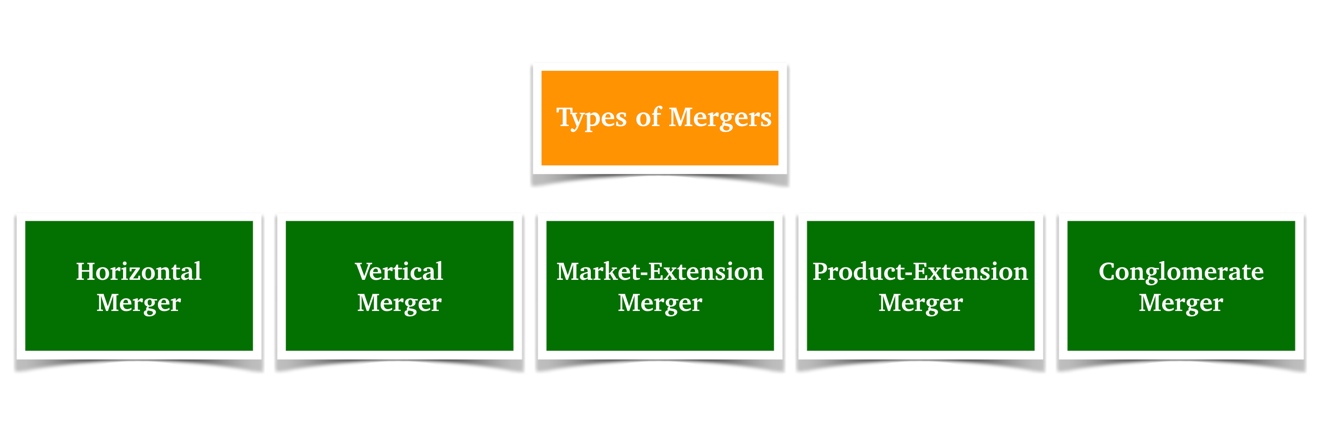
There are five different types of mergers and the purpose of this blog is to describe these in more detail.  This writing is not meant to be a comprehensive description of each, but rather an introduction.

A merger is an agreement that unites two existing companies into one new company.  Generally, mergers are done to expand a company's reach, expand into new market segments, or to gain market share. Most of the time, mergers and acquisitions are done for either offensive or defensive reasons.

Types of mergers

The Five Basic Types of Mergers

1.  Horizontal Merger: This is a merger between companies that are in direct competition with each other in terms of product lines and markets.

A famous example of a horizontal merger was the merger between HP (Hewlett-Packard) and Compaq in 2011.  The successful merger created a global technology leader valued at over US$87 billion.

2.  Vertical Merger: A merger between companies that are in the same supply chain.

Example:  Walt Disney acquired Pixar Animation Studios for US$7.4 billion in 2006.  Pixar was an innovative animation studio and had talented people.  Walt Disney was a mass media and entertainment company.  By combining forces, they created a very powerful company in their industry.

3.  Market-Extension Merger: A merger between companies in different markets that sell similar products or services.  The motive behind this type of merger is to make sure that the merging companies will be able to operate in a bigger market and thereby gain large numbers of new clients.

A good example was RBC Centura’s merger with Eagle Bancshares Inc. in 2002.  This market-extension merger helped RBC with its growing operations in the North American market.

4.  Product-Extension Merger: A merger between companies in the same market that sell different but related products or services. For this kind of merger, the products and services of both companies are typically not the same but are related.  The key is that they utilize similar distribution channels and common, or related, production processes or supply chains.

An example of a product-extension merger would be the merger between Mobilink Telecom Inc. and Broadcom.  The two companies both operate in the electronics industry and the resulting merger allowed the companies to combine technologies and extend their market reach.

5.  Conglomerate Merger: A merger between companies in unrelated business activities, e.g., a clothing company buying a software company. In other words, two totally different businesses.  These types of mergers are also further defined as:

  • Pure Conglomerate: In this case, the two companies have nothing in common. An excellent example of a Pure Conglomerate merger was the creation of W.R. Grace a specialty chemicals and industrial business that went on to buy over 150 different businesses, including retail outlets (Herman's Sporting Goods, Channel, Handy Dan, Angels, Diana, Sheplers), food chains (Del Taco, Coco's, Moonraker, Plankhouse, Houlihan's Old Place), coal, oil and natural gas (Booker Drilling, TRG, Homco & A-1 Bit & Tool, Davison cracking catalysts), construction (Zonolite insulation), graphic arts (Letterflex printing systems), chemicals (Dartak emulsion polymers, Evans sulfur compounds), agriculture (phosphate and nitrogen-based fertilizers), and hospital products (Vestal disinfectants).

  • Mixed conglomerate: Mixed conglomerate mergers are ones where the two companies that are merging with each other have the goal of gaining access to a wider market and client base or expanding the range of products and services that are being provided by the respective companies. A possible example of this might be a merger of Bank of America and Starbucks, which would broaden both companies’ customer bases and product ranges.  To some extent, Capital One is already pursuing this strategy via its cafes.

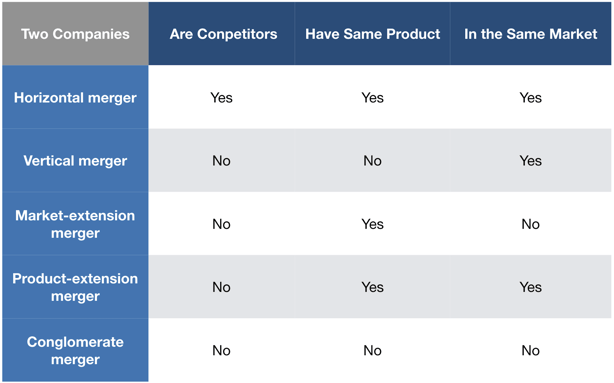
Listed below is a table that summarizes the different types of mergers.

Screenshot 2024-03-14 at 11.03.57

Written by He (Henry) Wang

2 April 2020


Versailles Group, Ltd.

Versailles Group is a 37-year-old boutique investment bank that specializes in international mergers, acquisitions, and divestitures. Versailles Group’s skill, flexibility, and experience have enabled it to successfully close M&A transactions for companies with revenues greater than US$2 million. Versailles Group has closed transactions in all economic environments, literally around the world.

Versailles Group provides clients with both buy-side and sell-side M&A services and has been completing cross-border transactions since its founding in 1987. 

More information on Versailles Group, Ltd. can be found at www.versaillesgroup.com.

For additional information, please contact

Donald Grava

Founder and President - Versailles Group, Ltd.

+617-449-3325

Apr 27

Q1 2017 M&A Was Robust

Donald Grava April 27, 2017

Global M&A activity for the first quarter of 2017 was robust.  There have been US$1.9 trillion in announced, completed, or pending M&A transactions.  In comparison with Q1 2016, M&A activity increased by an incredible 72%, which is partially due to a weak start of 2016.

In the US, M&A deal activity increased in Q1 2017.  Specifically, the value of M&A transactions was 13.2% above Q1 2016.

Q1 2017 M&A Versailles Grouop


In the middle market, there were 2,643 transactions for the quarter, the best first quarter since 2007.

Internationally, European M&A in the first quarter increased 16%, in comparison to the same period in 2016, to US$215.3 billion.  This transaction value was the best first quarter since 2008.  British M&A activity remained relatively strong in the first quarter of the year despite expectations of a slowdown ahead of the country's exit from the European Union.

M&A involving Asian companies fell 39% in the first quarter of 2017 to US$176 billion, the lowest level in nearly three years.  Tighter regulations in China have made it tougher for Chinese firms to launch takeovers overseas, which had a major impact on the region's overall deal-making in the first quarter.

There are a number of strong contributing factors to increasing M&A activity this year. First, sales and earnings growth is continuing, which portrays strong aggregate demand.  Rising demand encourages CEOs to make acquisitions to expand their businesses.  In addition, companies need to demonstrate growth to shareholders, which provides another reason to make acquisitions.  Second, the slowdown in emerging markets is forcing multinationals to find new avenues of growth.  M&A is actually the quickest route to growth.  Sometimes, it’s easier and less risky than innovation or cost-cutting.  Third, technology is also driving M&A activity.  Disruptive industries such as Artificial Intelligence, FinTech, and the Internet of Things are all continuing to contribute to M&A activity.

To summarize, overall, the M&A outlook for the rest of 2017 looks very favorable.

Written by Donald Grava

27 April 2017


Versailles Group, Ltd.

Versailles Group is a 30-year-old boutique investment bank that specializes in international mergers, acquisitions, and divestitures. Versailles Group’s skill, flexibility, and experience have enabled it to successfully close M&A transactions for companies with revenues greater than US$2 million. Versailles Group has closed transactions in all economic environments, literally around the world.

Versailles Group provides clients with both buy-side and sell-side M&A services, and has been completing cross-border transactions since its founding in 1987. 

More information on Versailles Group, Ltd. can be found at www.versaillesgroup.com.

For additional information, please contact

Donald Grava

Founder and President - Versailles Group, Ltd.

+617-449-3325

Feb 26

Global M&A Has Best January Since 2000

Donald Grava February 26, 2017

Global M&A Has Best January Since 2000

Under multiple stimuli, M&A activity in 2017 is off to an exceptionally strong start.  In fact, January’s M&A activity was the highest since 2000.  Almost 4,700 individual transactions were announced.
 
Versailles Group M&A activity
 

Spurred by a global positive sentiment, increased credit availability, and pent-up demand from 2016, companies sprang into action in January with the goal of getting deals closed quickly.  In excess of US$270 billion in worldwide mergers and acquisitions were announced in the month of January, which was an increase of 30% from the US$207 billion announced in January of 2016.

The M&A activity of early 2017 was bolstered by the healthcare and energy sectors.  The value of healthcare transactions totaled US$58 billion, and was led by Johnson & Johnson’s US$29 billion acquisition of Actelion Ltd and Mars Inc.’s US$9.1 billion’s acquisition of VCA Inc.  The Johnson & Johnson - Actelion deal ranked as Johnson & Johnson’s largest-ever acquisition and the third largest ever U.S. acquisition of a foreign company.  The top energy sector M&A deal announced in January was DCP Midstream Operating, LP’s US$8.86 billion acquisition of substantially all of the remaining assets of DCP Midstream LLC including assumed liabilities.

Mergers and acquisitions in the technology, media and telecommunications (TMT) sector will continue to soar in 2017 due to a number of significant factors.  Companies in a wide array of industries including retail, manufacturing, and financial services will use M&A as a tool to improve efficiency in business processes, increase protection against cyber attacks, manage and analyze data better, etc.  This trend will translate into an increasing value of tech companies from an M&A perspective.  Valuations will also be driven up as strategic buyers and private equity firms race to compete for the best technology targets.


Versailles Group, Ltd.

Versailles Group is a 30-year-old boutique investment bank that specializes in international mergers, acquisitions, and divestitures. Versailles Group’s skill, flexibility, and experience have enabled it to successfully close M&A transactions for companies with revenues greater than US$2 million. Versailles Group has closed transactions in all economic environments, literally around the world.

Versailles Group provides clients with both buy-side and sell-side M&A services, and has been completing cross-border transactions since its founding in 1987. 

More information on Versailles Group, Ltd. can be found at www.versaillesgroup.com.

For additional information, please contact

Donald Grava

Founder and President - Versailles Group, Ltd.

+617-449-3325

26 February 2017

Feb 07

2016 Global M&A - US Led the Way

Donald Grava February 7, 2017

 2016 Global M&A in Review – US Led the Way

In 2016, there were 96,665 M&A transactions closed with an aggregate value of US$4,734 billion.  In terms of deal value, 2016 was the third best year since 2007, significantly higher than any other year and only slightly surpassed by 2014, the second best year when US$4,802 billion of transactions were completed.  That being said, 2016’s M&A activity was definitely lower than 2015.


Global M&A Activity by Volume and Value

2-7-2017 Blog Post.jpg


In 2016, the US once again topped the rankings by both volume and value.  Specifically in terms of deal value, US$1,617 billion of transactions were closed during the year.  Some of this activity can be attributed to the burst of mega deals led by Time Warner’s US$109 billion acquisition by AT&T, which was the largest transaction in the US, the second largest M&A deal globally, and one of the only two global deals worth over US$100 billion during the year.

Following the US’ leading position, China was second with a value of US$789 billion. The largest deal by value involving Chinese targets was the transaction between China National Petroleum Corporation and Jinan Diesel Engine in a reverse takeover worth US$11 billion in December.  Chinese companies completed ten of the top 20 deals in Asia-Pacific in 2016.

The UK was third with US$420 billion of transactions. The largest deal by value in the UK involved Anheuser-Busch InBev’s US$124 billion acquisition of SABMiller, which was also the largest globally.

With strong M&A performance in the US, China, UK and other countries combined with an environment that is conducive to M&A, sellers or buyers should have the confidence to embark on a transaction in 2017.

Candidly, now is the best time to make plans to complete a transaction in 2017.  Sellers should act before buyers/investors’ investment plans and funds have been devoted to other transactions.  Buyers should take advantage by identifying the highest quality targets and moving on them quickly to avoid competitive bidding situations.

Versailles Group, Ltd.

Versailles Group is a 30-year-old boutique investment bank that specializes in international mergers, acquisitions, and divestitures. Versailles Group’s skill, flexibility, and experience have enabled it to successfully close M&A transactions for companies with revenues greater than US$2 million. Versailles Group has closed transactions in all economic environments, literally around the world.

Versailles Group provides clients with both buy-side and sell-side M&A services, and has been completing cross-border transactions since its founding in 1987. 

More information on Versailles Group, Ltd. can be found at www.versaillesgroup.com.

For additional information, please contact

Donald Grava

Founder and President - Versailles Group, Ltd.

+617-449-3325

7 February 2017

Jan 13

M&A in 2017

Donald Grava January 13, 2017

M&A in 2017 

Versailles Group, m&a, i want to sell my business


The chart above depicts M&A activity by value.  As you will note, 2016 was about 16% lower than 2015 even though it was the third busiest year ever.

M&A in 2017, for a number of reasons, is projected to be robust and will probably be a record year for several reasons, including:

► In 2016 private equity firms raised almost US$250 billion for acquisitions, which is now available.

► Large corporates worldwide are still "sitting" on very large amounts of cash that they need to deploy.

► The new US President is expected to make some fundamental changes that will be business friendly.

► Buyers and sellers are expected to take advantage of current market conditions.

► The low growth economy encourages the use of M&A as a tool to grow a company, acquire technology or R&D, etc.

► Interest rates are still low, but are expected to increase over time - motivating buyers to move sooner rather than later.

►Looming economic uncertainty is motivating buyers and sellers to complete transactions.

►Sellers worries about valuations, which were an impediment in 2016, have been alleviated.  Now, sellers are becoming worried that if they don't complete a transaction in the near term, they may miss the "window."


Versailles Group, Ltd.

Versailles Group is a 30-year-old boutique investment bank that specializes in international mergers, acquisitions, and divestitures. Versailles Group’s skill, flexibility, and experience have enabled it to successfully close M&A transactions for companies with revenues greater than US$2 million. Versailles Group has closed transactions in all economic environments, literally around the world.

Versailles Group provides clients with both buy-side and sell-side M&A services, and has been completing cross-border transactions since its founding in 1987. 

More information on Versailles Group, Ltd. can be found at www.versaillesgroup.com.

For additional information, please contact

Donald Grava

Founder and President - Versailles Group, Ltd.

+617-449-3325

13 January 2017